Quality & Purity Standards
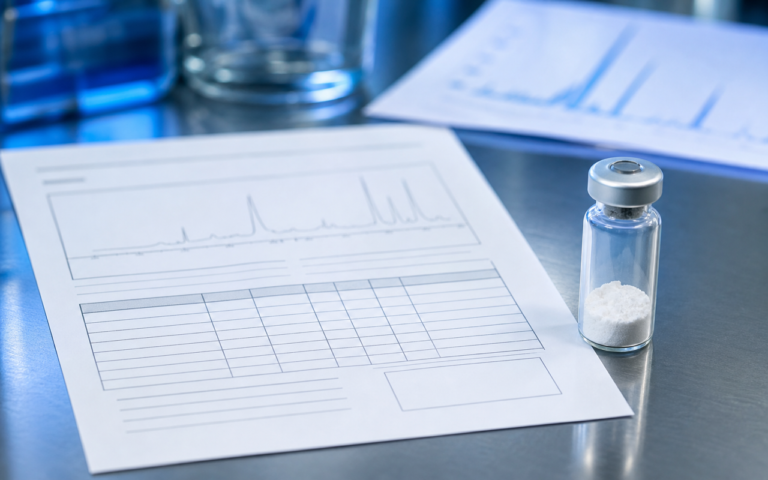
BPC-157 COA Interpretation: Reading Your Batch Report
A step-by-step walkthrough of every field in a BPC-157 certificate of analysis, from HPLC purity to endotoxin limits—so researchers know exactly what…
Research Blog
A step-by-step walkthrough of every field in a BPC-157 certificate of analysis, from HPLC purity to endotoxin limits—so researchers know exactly what…
Amino acid analysis breaks a peptide into its individual amino acids to verify composition. Here’s how the process works and why it’s…
Endotoxin contamination can compromise research results. Here’s what endotoxins are, how LAL testing works, and what acceptable endotoxin levels look like for…
A COA should be batch-specific with HPLC, MS, and endotoxin data. Here’s a step-by-step guide to reading and verifying your peptide’s certificate…
Peptide purity is measured by HPLC and expressed as a percentage. Here’s what each purity grade means, how testing works, and which…
Fmoc and Boc are two chemical strategies for protecting amino acids during peptide synthesis. Here’s how they differ, which one most manufacturers…
Most research peptides are made using solid-phase peptide synthesis (SPPS), a Nobel Prize-winning method. Here’s a plain-English explanation of how SPPS works…
Bacteriostatic water is essential for reconstituting GLP-3 in the lab. Here’s what it is, how it differs from sterile water, and why…
GLP-3 arrives as a white lyophilized powder because freeze-drying dramatically extends its shelf life. Here’s what lyophilization is, why it matters, and…
Research grade means 98%+ purity with third-party verification and batch-specific documentation. Here’s how research grade compares to pharmaceutical grade and why it…