
Peptide Guides
What Is a Mitochondrial Peptide? A Beginner’s Guide
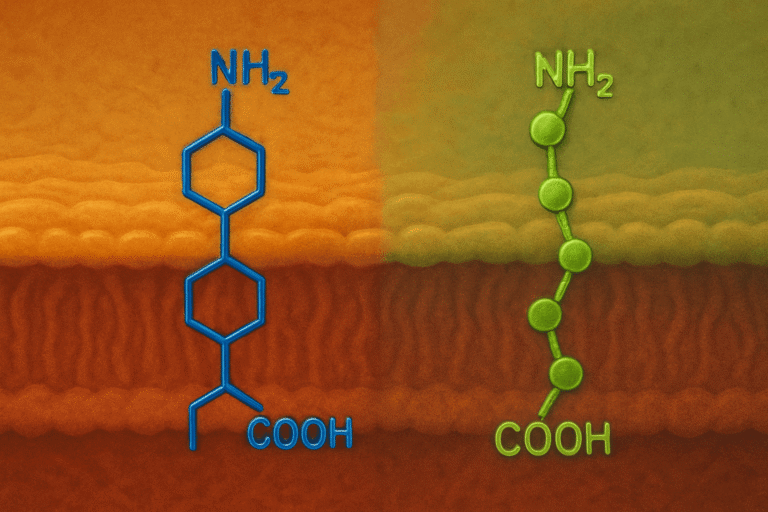
Mitochondrial peptides are encoded by mitochondrial DNA rather than nuclear DNA. Here’s a plain-English guide to what makes them unique and why…

Research Blog
Mitochondrial peptides are encoded by mitochondrial DNA rather than nuclear DNA. Here’s a plain-English guide to what makes them unique and why…
SS-31 is a synthetic peptide designed to reach mitochondria. MOTS-c is encoded by mitochondrial DNA itself. Here’s how these two approaches to…
MOTS-c is one of the few known peptides encoded by mitochondrial DNA rather than nuclear DNA. Here’s why that’s remarkable and what…
GHK-Cu is a naturally occurring copper peptide studied for its role in collagen signaling and tissue biology. Here’s what preclinical research shows…
KLOW is Alpha Peptides’ proprietary research blend built around KPV, a tripeptide studied for its interactions with inflammatory pathways. Here’s a plain-English…
GLOW is Alpha Peptides’ proprietary blend built around GHK-Cu, a copper peptide naturally found in blood plasma. Here’s what it contains, why…
Peptide research evolved from single-target compounds to dual agonists to triple agonists like GLP-3. Here’s the story of how each generation built…
Mass spectrometry is one of the most powerful analytical tools in peptide research — and one of the most misunderstood by non-scientists.…
HPLC — high-performance liquid chromatography — is the gold standard method for measuring peptide purity. If you’re sourcing research peptides, understanding what…
Your peptide arrived as a white powder in a tiny vial — or maybe as a liquid. Does the format matter? It…