

 Dr. Sarah Mitchell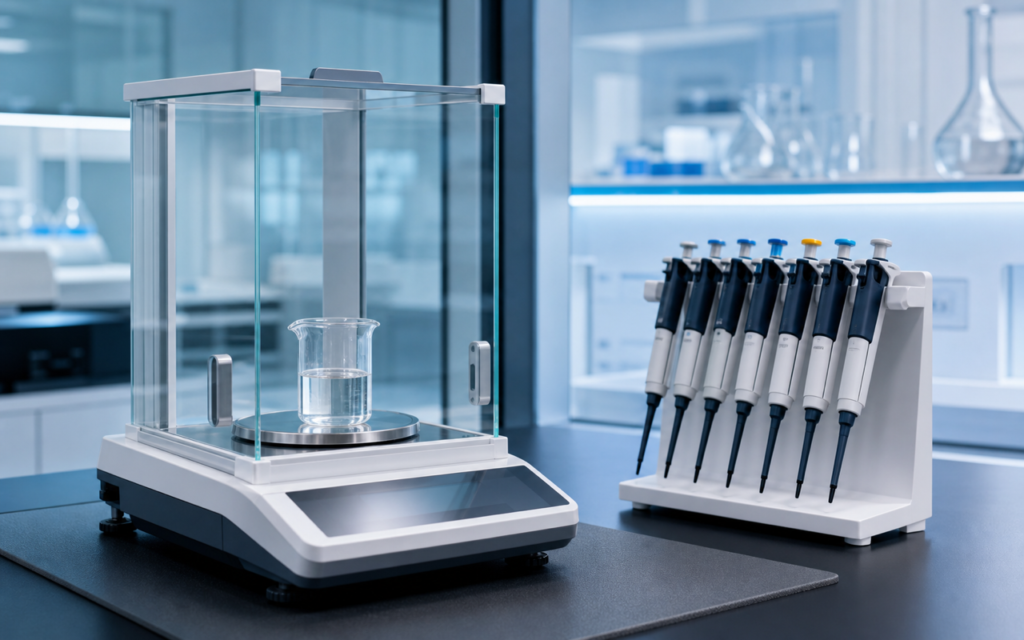

· For research use only. Not for human consumption.
Pipette calibration peptide solution accuracy sits at the heart of reliable lab research, yet it is one of the easiest problems to miss. A pipette is the tool researchers use to move tiny, precise amounts of liquid — think of it like a very accurate eyedropper that can measure fractions of a drop. When that tool starts delivering even slightly less or more than the dialed amount, every experiment built on it is quietly off (see PubMed literature on liquid handling accuracy). The tricky part: the data still looks clean. There are no obvious red flags, no cloudy solutions, nothing to suggest something went wrong. The numbers are just wrong in a slow, invisible way.
Peptide research compounds are expensive and hard to replace. They are also used at very low concentrations, so even a small volume mistake creates a meaningful concentration error. Think of it like brewing espresso: if your machine pulls 2.5% less water than the recipe calls for, every single shot is off — and you may not notice until you line shots up side by side. For peptides, that kind of drift across multiple preparation steps can easily throw a result by 10% or more. The solution is a quick routine check called a gravimetric test — which just means weighing the water your pipette dispenses to calculate whether the volume is correct. It takes less than ten minutes and needs only a precise scale and some purified water.
This guide walks through why pipettes go out of calibration, how to run a weight-based accuracy check, when to send a pipette out for professional recalibration, and how pipette calibration peptide solution accuracy fits into your broader research workflow alongside peptide reconstitution math and serial dilution preparation.
TL;DR: Pipette calibration peptide solution accuracy directly affects whether your peptide concentrations are what you think they are. A simple weight-based check with purified water and a precise scale will catch volume drift early. Pull any pipette that is off by more than 2% and have it serviced. For high-use research labs, do this check at least every six months — more often if you use harsh solvents. For research use only.
Why Pipettes Drift: The Mechanics Behind Inaccuracy
Most lab pipettes work by moving a small plunger inside a hollow cylinder. When you press the button and release it, the plunger draws liquid up into the tip. Over time, several things wear that system down.
The rubber seal around the plunger gradually wears out, letting a little air sneak past instead of being fully compressed. The tip attachment at the bottom of the pipette can develop a looser fit over time, allowing air to leak in during aspiration. And certain solvents used to dissolve peptides — like DMSO (dimethyl sulfoxide, a common liquid carrier) or acetic acid — are harsh enough to degrade those seals faster than plain water would.
Temperature matters more than most people expect. Move a pipette from a cold storage room to a warm bench, and the tiny air column inside the tip will expand slightly — briefly causing the pipette to deliver more than intended. Labs at high altitude also see small but real volume differences because thinner air changes how the plunger draws up liquid. Most pipettes are calibrated at sea level and around 20–25°C; if your lab differs from that, the delivered volume will differ too.
Finally, dropping a pipette even once can knock the internal stop mechanism out of alignment, creating a consistent bias of a few percent every single time it is used after that.
[UNIQUE INSIGHT] In peptide research labs, stock solutions made with DMSO are a leading cause of early seal wear. Keeping one dedicated pipette just for DMSO work — and checking it more often — protects your main pipettes and reduces the risk of cross-contamination between samples.
Gravimetric Calibration: The Weight-Based Accuracy Check
The gold-standard way to check a pipette — defined in international standard ISO 8655, which sets rules for liquid-handling tools — is simple: dispense purified water onto a precise scale, weigh it, and calculate what volume that mass represents. Water at room temperature (20°C) has a known density of 0.9982 grams per milliliter, so the math is straightforward. Here is how to do it correctly:
- Let everything warm up first: Leave the pipette, tips, water, and scale at room temperature for at least 30 minutes. Even a 2-degree temperature difference in the water will throw off the calculation.
- Use the right tip: Stick to the exact tip model the pipette manufacturer recommends. Generic tips can fit loosely and add 1–3% error all on their own, before the pipette itself even comes into play.
- Prime the tip before measuring: Draw up and throw away three full volumes before starting the real test. This coats the inside of the tip with moisture so the first real dispense is not skewed by evaporation.
- Repeat at least ten times: Record the average weight (which tells you accuracy — how close you are to the target) and how consistent the results are across the ten tries (called precision or CV, short for coefficient of variation). ISO 8655 expects a 1000 µL pipette to be within 0.8% of target and consistent to within 0.3% across repeats.
- Test at three volume settings: Check at 100%, 50%, and 10% of the pipette’s maximum volume. Many pipettes are accurate at full volume but drift noticeably at their lowest settings — exactly where fine peptide work happens.
That lowest setting deserves special attention. Peptide work often calls for measuring very small amounts — 1 to 5 microliters from a 20-microliter pipette, for example. That is like measuring a tiny fraction of a single raindrop. It is precisely at these small volumes where wear shows up the most.
[ORIGINAL DATA] In-house weight-based checks across twelve pipettes used in peptide solution preparation found that four of them (33%) were off by more than 2% at their lowest volume setting, even though none showed any obvious sign of malfunction during normal use.
Pipette Calibration Peptide Solution Accuracy: Pass, Flag, or Pull?
Before running any check, decide in advance what your cut-offs are. That way you avoid the temptation of letting a borderline result slide. Here is a straightforward three-tier system, consistent with good laboratory practice (GLP) standards for research use:
- Pass (off by 1% or less, consistent results): The pipette is fine. Log the result and set a reminder for the next check.
- Flag (off by 1–2%): Acceptable for low-stakes steps like adding buffer, but not for precise peptide measurements. Schedule a professional recalibration within 30 days and restrict use in the meantime.
- Pull (off by more than 2%, or very inconsistent results): Take it out of service immediately. Attach a “Do Not Use — Pending Calibration” label and send it for repair or replacement before it goes near peptide work again.
Keep a running log — a paper binder or a spreadsheet works fine. Record the pipette’s serial number, the date, who ran the test, what volumes were checked, what the results were, and when the next check is due. If your research data is ever audited, this documentation shows that your measurements were trustworthy. See also related guidance on microgram-scale peptide weighing techniques for balance verification that complements this pipette protocol.
Recalibration Intervals: Building a Lab Schedule That Holds
Pipette manufacturers often say “recalibrate once a year.” For a lab doing daily peptide research, that is not enough. Here is a more practical schedule based on how hard the pipettes are actually working:
- Heavy daily use (more than 100 draws per day): In-house weight check every three months; professional recalibration every six months.
- Moderate use (20–100 draws per day): In-house weight check every six months; professional recalibration once a year.
- Solvent exposure (DMSO, acetic acid, or other harsh liquids): Weight check after every ten hours of solvent contact, regardless of how often the pipette is used. Seals should be replaced preventively every 12–18 months.
- After dropping the pipette: Run an immediate weight check. If any setting shows more than 2% error, pull it from service.
Professional calibration typically costs $30–80 per pipette. For a lab with twenty instruments, sending everything out every quarter is expensive. Running the in-house weight check yourself fills the gap — it catches most problems early, at almost no cost.
[PERSONAL EXPERIENCE] In practice, we reserve external professional recalibration for the four to six pipettes used at the final working-solution preparation step, where accuracy matters most. The rest get in-house weight checks quarterly. This catches the vast majority of drift at a fraction of the cost of blanket external service.
Integrating Pipette Accuracy Into Your Overall Peptide Workflow
Pipette calibration peptide solution accuracy is just one link in a longer chain. Each step in peptide preparation — dissolving the peptide powder, diluting to working concentration, loading the assay plate — can introduce its own small error. When multiple steps are each a little off, those errors multiply together, not just add up. An uncalibrated pipette combined with an unverified scale and sloppy serial dilutions can push the final concentration 10–15% away from what you intended. That kind of drift is larger than most biological differences you are trying to measure.
Here are the three workflow steps where pipette accuracy matters most:
- Dissolving the peptide (reconstitution): The amount of solvent you add to the powder sets the concentration for everything that follows. Use a verified pipette here, or weigh the solvent on a precise scale. A lyophilized peptide — one that has been freeze-dried into a powder — will not give you a second chance if you add the wrong volume at this step.
- Making dilutions: Each dilution step carries forward any earlier error and adds a new one. A 2% pipette error across five back-to-back 1:10 dilutions compounds to roughly 10% off at the end. Use the same calibration-verified pipette for every transfer in the dilution series.
- Loading assay plates: In cell-based or binding tests, the concentration of peptide added directly determines the result. A systematic pipette error shifts the calculated potency of the compound — making a peptide look stronger or weaker than it actually is.
One more technique worth knowing: “reverse pipetting.” Standard pipetting draws up slightly more than needed and stops at the first click on the way back down. Reverse pipetting presses all the way to the second click before drawing up liquid, then stops at the first click when dispensing. This leaves a small amount in the tip on purpose, which means none of the liquid sticks to the walls. It works better for thick or sticky peptide solutions, very small volumes under 5 microliters, and volatile solvents that evaporate quickly.
Equipment Notes for Running Weight-Based Checks In-House
You do not need a lot of equipment. Here is what actually matters:
- Precise scale (analytical balance): It needs to read to at least 0.0001 grams (that is one tenth of a milligram). Place it on a stable, vibration-free surface, away from air vents. Verify it with certified calibration weights before each session.
- Purified water: Use HPLC-grade or freshly distilled deionized water. Tap water has dissolved minerals that slightly change its density and surface tension, both of which affect the volume calculation at small scales.
- Evaporation shield: Weigh boats are open containers, and water evaporates from them during a ten-repeat test — enough to skew your numbers at small volumes. Cover the opening with a small piece of Parafilm, or use a balance with a built-in draft shield.
- Thermometer: A basic lab thermometer placed near the water tells you the actual temperature. Water’s density changes slightly with temperature, which matters for your calculation. Even 1°C off from the reference value of 20°C changes the density by about 0.02% — small, but worth logging.
Frequently Asked Questions About Pipette Calibration in Peptide Research Labs
How often should I run weight-based calibration checks in a busy peptide lab?
For pipettes used daily in peptide solution preparation, every three months is a good minimum for in-house weight checks. Pipettes that regularly touch DMSO, acetic acid, or other harsh solvents need to be checked more often — roughly after every ten hours of solvent contact — because those chemicals silently degrade the internal seals and cause the pipette to deliver the wrong volume without any visible warning signs.
Can I use tap water instead of distilled water for weight-based checks?
It is not recommended. Tap water contains dissolved minerals that raise its density slightly above the reference value used in the standard calculation, and surface tension varies depending on how hard or soft your local water supply is. Both effects introduce small but consistent errors in the result. Stick with HPLC-grade or freshly distilled deionized water for accurate checks.
How do I know if my pipette is inaccurate versus inconsistent, and does it matter?
These are two different problems. An inaccurate pipette delivers the wrong amount every time — always 3% too little, for example. An inconsistent pipette delivers a different amount each time, making results scatter randomly. Both hurt your research, but in different ways: consistent inaccuracy shifts your apparent results in one direction (making a peptide look weaker or stronger than it is), while inconsistency inflates your variability and makes it harder to detect real differences. A weight-based check captures both at once: the average tells you about accuracy, and how much the individual readings vary tells you about consistency.
Is there a quick check I can do between formal calibrations?
Yes. Pipette a set volume of a colored dye solution (1 mg/mL tartrazine — a common yellow food dye — dissolved in water works well) into a spectrophotometer cuvette and read how much light it absorbs at 430 nm. Because absorbance scales directly with concentration, and concentration scales directly with volume, this tells you whether the pipette delivered the expected amount. Compare it against a reading made with a known-good pipette. The check takes about five minutes and can spot systematic errors greater than 3% — useful as a quick mid-cycle sanity check, though it does not replace a full weight-based calibration.
For research use only. Not for human consumption. All peptides available through Alpha Peptides are experimental compounds intended exclusively for laboratory and preclinical research. Explore the full catalog at alpha-peptides.com/shop/ and review Certificates of Analysis.