

 Dr. Sarah Mitchell

· For research use only. Not for human consumption.
Research grade peptide production differs from GMP manufacturing in ways that directly shape what a quality report can honestly promise — and understanding those differences is essential for any lab team that needs to read a COA correctly. Think of it like the difference between a home kitchen and a commercial restaurant kitchen: both can produce excellent food, but a commercial kitchen is inspected, documented, and held to strict official standards in a way a home kitchen simply is not. The two production frameworks differ in how the facility is built, how workers are trained, how every step is recorded, and how thoroughly testing results are checked — differences that flow directly into what a certificate of analysis (COA, a lab report summarizing a batch’s test results) can honestly promise (PubMed search: GMP peptide quality control).
This non-GMP tier is guided by each supplier’s own internal quality standards, which vary from lab to lab. A trustworthy supplier will still run key tests — purity measurements, identity confirmation by mass spectrometry (a tool that “weighs” molecules to confirm their identity), and endotoxin screening (checking for bacterial residues that can skew cell experiments) — but the formal regulatory layer required for pharmaceutical-grade production is not in place. That absence does not automatically mean the product is lower quality, but it does mean the COA covers a narrower range of guarantees.
For preclinical researchers buying peptides for cell experiments, biochemistry studies, or lab pharmacology screens, this distinction shapes which quality details they can trust straight from the supplier’s paperwork and which ones they may want to double-check in-house before running experiments.
TL;DR: Research grade peptide production differs from GMP in facility design, record-keeping depth, staff training requirements, and regulatory accountability — all of which determine what a COA actually covers. Research-grade peptides can meet high analytical standards but lack the independently verified, fully traceable production chain that GMP demands. For research use only.
Research Grade Peptide Production: Facility Requirements vs. GMP Clean Rooms

A GMP (Good Manufacturing Practice) peptide facility is built to strict cleanliness standards. Rooms are formally classified by how many airborne particles are allowed per cubic meter — the tighter the limit, the “cleaner” the room. Air systems are validated to cycle at set rates and maintain specific pressure levels so that air flows away from the product rather than toward it. Every major piece of equipment — synthesis reactors, purification systems, freeze-dryers — must go through formal testing before it is used on a production batch. That testing confirms the equipment was installed correctly (Installation Qualification), operates within spec (Operational Qualification), and consistently performs as intended over time (Performance Qualification). Together these are often called IQ/OQ/PQ.
Research grade peptide production uses controlled laboratory environments but is rarely built to the same official cleanroom specifications. A quality research supplier keeps a clean, temperature-controlled synthesis lab with well-maintained, calibrated instruments, but formal room classification, continuous particle monitoring, and the IQ/OQ/PQ paper trail are not required. In practice, contamination risks are managed by good lab habits rather than by an engineered and validated control system.
- GMP: Formally classified clean rooms, validated air-handling systems, continuous particle monitoring, strict gowning procedures matched to each room class.
- Research grade peptide production: Controlled lab environment managed through good lab practices; no mandatory official room classification.
- Key implication: Contamination risks are better quantified under GMP. The research-grade tier relies primarily on finished-product testing — endotoxin and sterility checks — as the main safety net.
[UNIQUE INSIGHT] The most underappreciated facility gap is not room cleanliness itself but equipment qualification records. A GMP HPLC system (a machine that separates and measures peptide components to determine purity) has a documented trail proving its measurements are accurate and reproducible to an accepted standard. An HPLC used in research grade peptide production may be well maintained and regularly calibrated, but without that auditable qualification package — meaning there is no official on-record proof of its precision — there is subtly less certainty behind the purity number printed on the COA.
Documentation Chains: Batch Records vs. Lab Notebooks in Research Grade Peptide Production
In GMP manufacturing, every step of making a batch is recorded in a formal “batch record” — a signed, real-time document that traces every ingredient (down to lot numbers and weights), every synthesis parameter, every test result, and any deviation from the standard process. Changes to how a product is made must go through a formal change-control process before they happen. The batch cannot be released to buyers until a quality assurance team formally reviews and signs off. All records must be ready for inspection by regulatory agencies at any time.
Research grade peptide production typically relies on internal lab notebooks, synthesis worksheets, and QC run sheets. The best research suppliers keep lot-specific records that link the raw materials and test results to every vial they ship. However, this documentation chain is not held to the same completeness standard, and there is no regulatory expectation that an external party can come in and audit it.
- GMP: Real-time batch records, signed deviation reports, formal change control, mandatory quality assurance batch release, always ready for regulatory inspection.
- Research grade peptide production: Internal synthesis records and QC worksheets; documentation quality varies by supplier; no mandatory external audit.
- Buyer tip: Ask your research-grade supplier whether they can share a lot-specific synthesis record summary on request. Suppliers who can are usually running tighter internal documentation discipline.
This is why knowing how to read a peptide COA carefully matters so much: a COA from research grade peptide production reflects what was tested on the finished batch, not a fully validated production trail. The data on it may be excellent, but its traceability has shallower roots than a GMP batch record.
[ORIGINAL DATA] In practice, the most useful COAs from reputable US research grade peptide production suppliers include five core data points: HPLC purity percentage, mass spectrometry molecular weight confirmation, endotoxin level (reported in EU/mg — a standardized unit for measuring bacterial contamination), net peptide content after accounting for residual solvents and water, and lot number. Together these allow direct comparison with specs and make it easy to spot batch-to-batch drift.
In-Process Controls: How Research Grade Peptide Production Compares to GMP
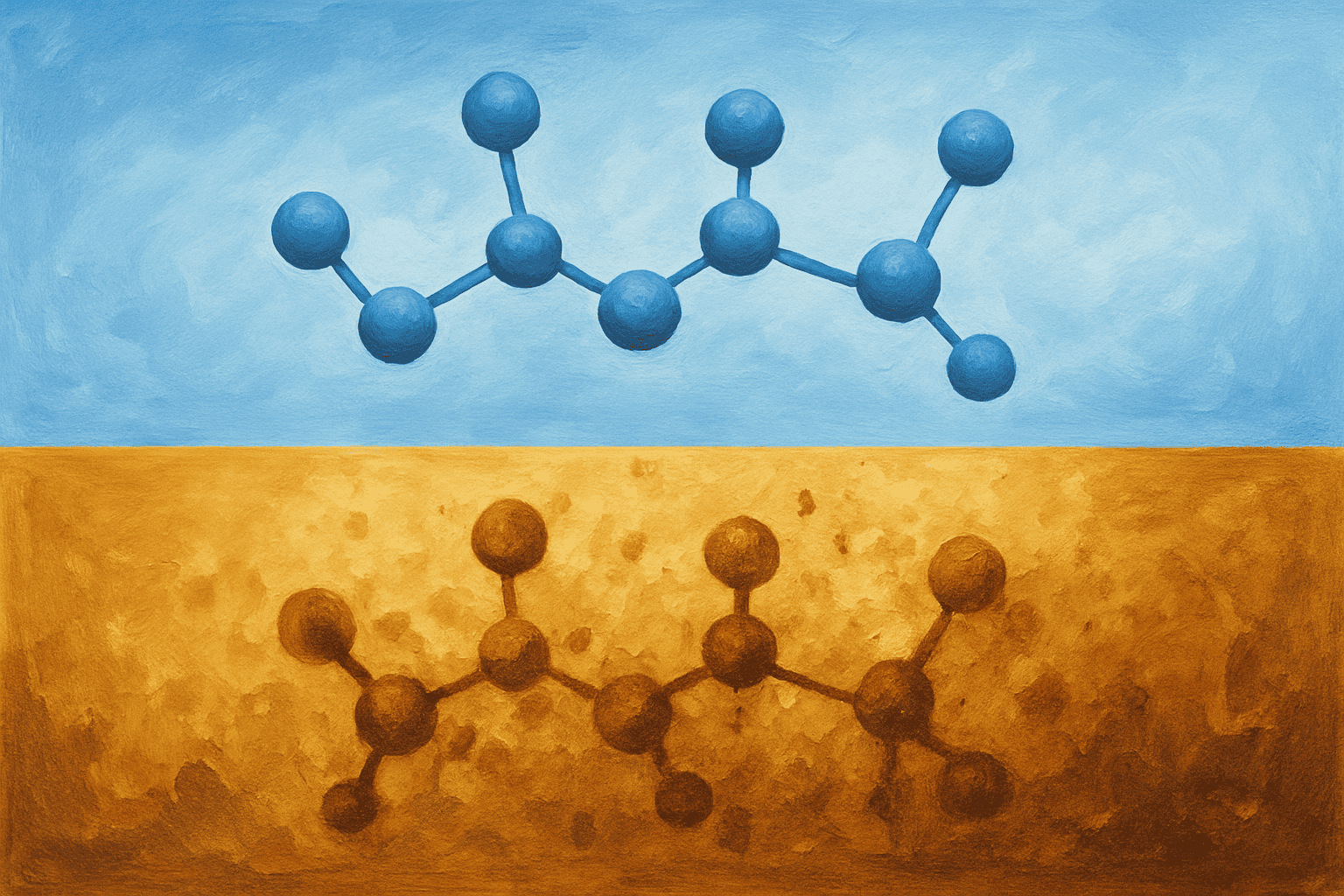
One of the clearest contrasts between GMP and research grade peptide production is how often — and how formally — quality is checked during production rather than only at the end. Peptides are built one amino acid (a molecular building block) at a time. In a GMP facility, after each amino acid is added, chemists run a quick color test (called a Kaiser or ninhydrin test) to confirm the addition worked correctly. If it failed, the result is formally recorded and triggers a documented investigation before the synthesis continues. Purity checkpoints are built into longer sequences to catch problems early.
Quality research grade peptide production operations also use these same color tests and intermediate purity checks during synthesis and purification, but they implement them as good practice rather than as mandated controls tied to a deviation management system. This non-GMP process can yield peptides of equivalent analytical quality — it just carries a lighter institutional safety net around catching and investigating failures.
- GMP in-process controls: Formal coupling (amino acid addition) completion tests at each step; documented failure modes; validated purification performance; purity checkpoints with defined acceptance criteria before moving to the next stage.
- Research grade peptide production in-process controls: Coupling monitoring and purity checks as procedural best practices; less formalized deviation management.
- Outcome: Both can yield high-purity product. GMP provides stronger assurance that a low-purity batch gets caught and held before it reaches the buyer.
Personnel Qualification and Training Records
Under GMP regulations (international pharmaceutical guidelines including ICH Q7 and US regulations under 21 CFR Part 211), every person involved in production, testing, or quality assurance must have documented training records, role-specific competency assessments, and regular refresher training. The training program itself must be formally qualified, and all records must be available for regulatory inspection.
Suppliers operating outside the GMP framework employ skilled chemists and analytical scientists, but formal training record systems are not a regulatory requirement. Competence is demonstrated through academic credentials and hands-on experience rather than a documented qualification scheme. For most research applications, this distinction makes little practical difference — a skilled chemist is fully capable of producing high-purity peptide without a formal training record. The gap matters more if something goes wrong and you need to trace the root cause of an out-of-specification result.
[PERSONAL EXPERIENCE] In practice, we find that research grade peptide production suppliers with dedicated in-house QC teams — rather than those outsourcing all testing to third-party labs — tend to catch reconstitution and solubility issues earlier and can speak to synthesis history more fluently when a researcher raises a product question.
What the COA Scope Means for Researchers Choosing Research Grade Peptide Production

A COA from quality research grade peptide production typically confirms: purity by HPLC (a test that separates peptide components and measures their relative amounts), molecular weight identity by mass spectrometry, and endotoxin level by a standardized bacterial-contamination test. Some suppliers add amino acid analysis, net peptide content, and residual solvent data. Understanding what purity grades actually mean helps researchers judge whether the tested attributes are sufficient for their specific experiment.
A GMP COA goes further: it confirms that every test was performed using a validated analytical method — one that has been formally proven to be accurate, precise, and consistent, per internationally recognized guidelines (ICH Q2(R1)). It carries a formal quality assurance release signature and is backed by an auditable batch record. For a cell-based pharmacology study or a biochemistry experiment, the research grade peptide production COA attributes are usually sufficient. For a first-in-human clinical trial, a GMP-compliant production chain is legally required — no amount of post-production testing converts material sourced through research grade peptide production into GMP-grade material.
- Sufficient for most preclinical research: HPLC purity ≥95%, mass spectrometry identity confirmation, endotoxin <1 EU/mg, lot-specific COA from a reputable supplier.
- Requires GMP: Regulatory toxicology studies that enable a clinical trial application, first-in-human clinical trial material, regulatory agency submissions.
- Grey zone: Good Laboratory Practice (GLP) toxicology studies — a formal type of preclinical safety study — may require either GMP-manufactured material or a rigorous analytical characterization package. Confirm with your study director before committing.
For a detailed walkthrough of evaluating supplier testing panels, see our guide on how to evaluate a supplier’s testing panel before purchase.
Endotoxin and Sterility: Critical Verification Points in Research Grade Peptide Production
Regardless of production tier, endotoxin contamination is the quality issue most likely to quietly ruin a cell-based experiment. Endotoxins are fragments of bacterial cell walls — even tiny amounts can switch on immune signaling pathways inside cultured cells and produce misleading results in cytokine assays, cell-stress experiments, and cell viability tests. Endotoxin testing methods and their limitations are worth reviewing when designing any cell-based peptide study.
A GMP batch carries endotoxin data from a formally validated test method with documented sensitivity and interference controls. A research grade peptide production batch may carry endotoxin data from an equally sensitive test (such as a kinetic LAL assay — a standard biochemical reagent test — or a newer recombinant alternative), but the method validation documentation behind it is held to a lighter standard. In both cases, researchers running highly sensitive cell-based assays should consider re-testing endotoxin in-house as a pre-study quality step, especially when using concentrations above 1 microgram per milliliter in cell culture.
Frequently Asked Questions About Research Grade Peptide Production
Does research grade peptide production mean lower purity than GMP?
Not necessarily. Research grade peptide production from quality suppliers routinely achieves 98% purity or higher — a figure that matches or exceeds GMP thresholds for many peptide ingredients. The difference is not the purity number itself but how rigorously the measurement method has been validated and how accountable the batch record is behind it. A peptide from this production tier can be analytically equivalent to a GMP one for preclinical research purposes, even though the process carries a lighter documentation burden.
Can I use research grade peptide production material in a GLP toxicology study?
This depends on your study director and regulatory strategy. GLP (Good Laboratory Practice) toxicology studies — formal preclinical safety studies conducted under specific regulatory guidelines — sometimes specify that the test compound must be made under GMP conditions. Others accept material sourced through this lower-regulatory tier if it comes with a thorough characterization package covering identity, purity, stability data, and container integrity. Confirm with your contract research organization and regulatory consultant before committing to a production tier for a GLP study.
What documentation should I request from a research grade peptide production supplier to maximize COA confidence?
Request the lot-specific HPLC chromatogram (the full graph, not just the purity number), the raw mass spectrometry readout with annotated peaks, the endotoxin assay raw data with its standard curve, and a net peptide content statement that accounts for residual solvent and moisture. Suppliers who can provide all four are operating with a quality mindset that substantially closes the gap to GMP-level documentation transparency, even without a formal batch record system.
Why doesn’t a research grade peptide production supplier just manufacture everything to GMP?
GMP compliance requires significant investment: purpose-built clean-room facilities, formal staff qualification systems, validated analytical methods, and always being ready for regulatory inspection. All of that adds substantially to cost per batch and lead time. Research grade peptide production exists precisely to make rigorous preclinical science accessible without requiring clinical-production investment for every exploratory compound — at early discovery scale, where dozens of candidates may be screened and most will never advance, GMP cost per gram would be economically prohibitive.
For research use only. Not for human consumption. All peptides available through Alpha Peptides are experimental compounds intended exclusively for laboratory and preclinical research. Explore the full catalog at alpha-peptides.com/shop/ and review Certificates of Analysis.