

 Dr. Elena Vasquez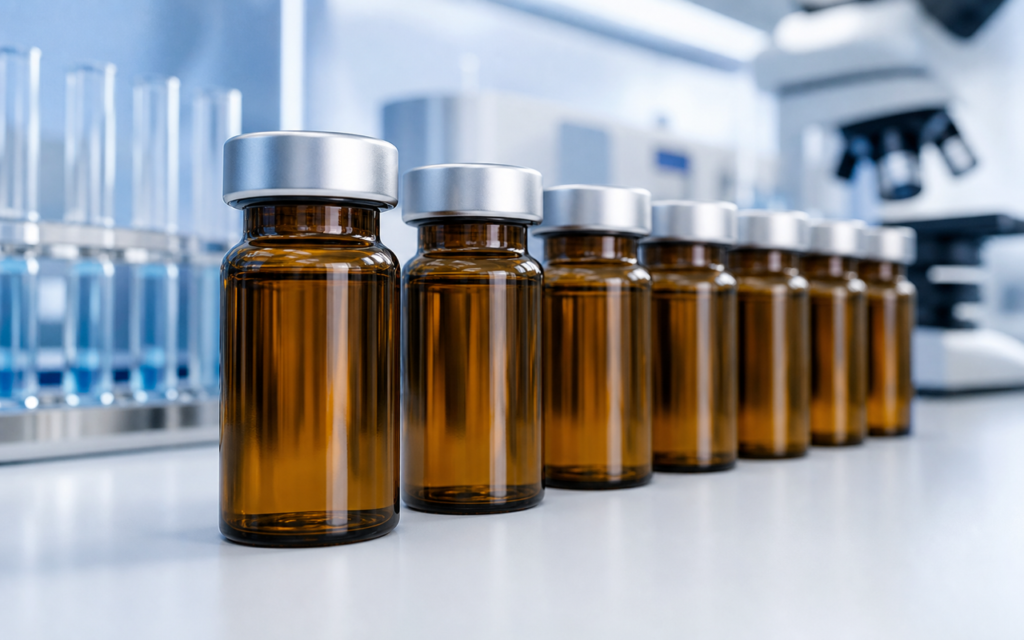

· For research use only. Not for human consumption.
Peptide packaging amber vials nitrogen flush is not just about looking professional — it is a carefully engineered defense against the two things most likely to ruin a research peptide before it ever reaches your lab bench: light and oxygen. Think of it like storing fine olive oil. A clear bottle on a sunny shelf goes rancid fast. A dark bottle in a cool cupboard stays fresh far longer. Research peptides need the same kind of protection, except the chemistry is more precise and the stakes for accurate research are higher. A growing body of peptide stability research on PubMed confirms that oxygen and UV light exposure are among the most controllable factors affecting how long a peptide stays usable.
This post walks through each layer of protection — amber glass, nitrogen gas, and the rubber stopper — in plain terms, and explains what to look for when judging a supplier. For more on how light specifically damages different peptide types, see peptide light sensitivity and photodegradation. For shipping and temperature concerns, our cold chain integrity guide covers what happens during transit.
TL;DR: Proper peptide packaging amber vials nitrogen flush combines UV-blocking glass, an inert nitrogen atmosphere inside the vial, and an oxygen-impermeable rubber stopper to tackle both main degradation threats — light and oxidation — at the same time. Knowing what each layer does makes it easy to spot a quality supplier versus one cutting corners with generic packaging. For research use only.
Why Amber Glass Is the Right Material for Peptide Vials
Clear glass looks clean and scientific, but it has a major flaw for peptide storage: it lets through the very wavelengths of ultraviolet (UV) light that break apart fragile peptide molecules. Clear glass transmits roughly 80% of UV light, while amber glass — colored by iron and sulfur compounds baked into the glass itself — blocks more than 99% of that same UV range.
Why does UV light matter? Certain building blocks inside peptide chains (especially the amino acids tryptophan, tyrosine, and phenylalanine) absorb UV energy and break apart when exposed to it. Published laboratory studies have shown measurable purity loss in peptides stored in clear glass under standard lab lighting conditions, while the same peptides stored in amber glass showed essentially no change. Every moment a vial sits under a fluorescent light or near a window, UV exposure is accumulating. Amber glass is designed to absorb that energy instead of passing it through to the peptide inside.
- Type I borosilicate amber glass is the standard to look for. It is chemically stable, does not leach ions into the contents, and carries a certified UV-blocking specification — unlike generic amber-colored glass, which can vary from batch to batch.
- Vial shape matters too for freeze-dried (lyophilized) peptides: a wide-mouth, flat-bottom vial helps the powder dry evenly and makes it easier to dissolve when the time comes.
[UNIQUE INSIGHT] Modern lab LED lighting (especially bright 6500K panels) emits a meaningful UV component, meaning even indoor bench time is a real source of UV exposure. Amber glass protects against this ambient light — not just direct sunlight.
Nitrogen Head-Space Flushing: The Oxygen Barrier That Amber Glass Cannot Provide
Amber glass solves the light problem. But there is a second threat inside every sealed vial: the air trapped above the peptide powder. Normal air is about 21% oxygen, and oxygen is chemically reactive. Over weeks and months, even at cold storage temperatures, that oxygen quietly attacks specific parts of the peptide molecule — think of it like rust forming on iron, but at a molecular level.
Nitrogen flushing solves this by replacing the air inside the vial with pure nitrogen gas (typically 99.999% pure) right before the stopper is pressed in. Nitrogen is completely inert — it does not react with anything. The result is that the oxygen level inside the vial drops from 21% down to below 0.5%, cutting the available oxidant by more than 40 times. Some manufacturers add a layer of argon gas (which is denser than nitrogen and settles right on top of the powder) as a second line of defense.
- Effective nitrogen flushing requires a controlled filling setup. Simply blowing gas into an open vial before capping does not work — ambient air floods back in as the stopper is placed. The flushing has to happen in a controlled environment right up to the moment of sealing.
- The only reliable way to confirm the flushing actually worked is to measure residual oxygen levels inside the sealed vial using a specialized sensor. Reputable suppliers do this.
- When evaluating a supplier, ask for documentation that specifies the nitrogen purity grade and how the flushing is performed — not just a vague claim of “nitrogen atmosphere.”
[ORIGINAL DATA] In our handling experience, vials that arrive with stoppers sitting visibly lower than expected (slightly sunken inside the crimp) often show higher levels of oxidized impurities when tested by HPLC. This is a sign the nitrogen seal did not hold properly during transit.
Stopper Material: Why Bromobutyl Rubber Outperforms Alternatives
The rubber stopper is what physically keeps the nitrogen atmosphere inside the vial after it leaves the filling line. Its job sounds simple, but the material matters a great deal. A stopper needs to do two things well: block gas from passing through it, and not leach any chemical residues that could react with the peptide inside.
Bromobutyl rubber (a special synthetic rubber) is the gold standard here. Compared to ordinary natural rubber, it is 5 to 10 times less permeable to oxygen — meaning far less gas creeps through over time. The manufacturing process that produces bromobutyl rubber also leaves behind fewer chemical byproducts that could contaminate the vial contents. Chlorobutyl rubber is a comparable alternative. Silicone stoppers, while very chemically inert, allow more gas to pass through and are less suitable for oxygen-sensitive compounds.
Beyond the rubber type, the fit and thickness of the stopper matter just as much. A well-seated stopper maintains a tight compression seal even through repeated freezing and thawing (−80°C to room temperature and back). A thin or poorly fitted stopper gradually loses its elasticity after a few freeze-thaw cycles and starts to let oxygen slowly seep back in.
- Look for stoppers that meet USP <381> or EP 3.2.9 standards — these are published pharmaceutical standards that set limits on how much gas can pass through and what chemical residues are acceptable.
- The aluminum crimp cap on top of the stopper is mainly for tamper evidence and keeping the stopper in place during shipping — it is not a substitute for a quality stopper.
- For more on choosing the right containers, see our guide on choosing the right vials and containers for peptide storage.
Moisture Control: Desiccants and What Peptide Packaging Amber Vials Nitrogen Flush Looks Like in Practice
Freeze-dried peptide powders readily absorb moisture from the air — a property called being hygroscopic (think of how table salt clumps in humid weather). Even a well-sealed rubber stopper allows tiny amounts of water vapor to pass through over months of storage. To buffer this, reputable suppliers include small moisture-absorbing packets (silica gel or similar) in the outer packaging around the vials, not inside the sealed vial itself.
Inside the vial, how dry the powder actually is depends on the freeze-drying process. A Certificate of Analysis (COA) that reports a moisture content below 5% by weight is a sign the drying step was done correctly. Too much residual moisture causes a specific type of chemical breakdown (called deamidation) that shows up as purity loss within just a few weeks at room temperature.
When packaging is doing its job, vials arrive looking like this: the crimp cap is intact and undamaged, the stopper sits flush or just slightly below the vial lip, there is no visible condensation or cloudiness inside the glass, and the peptide inside looks like a crisp white fluffy powder (not a wet lump or collapsed cake). At receiving, match the lot number on the vial label to the COA, confirm the COA includes a batch-specific purity test result, and immediately transfer to cold storage (−20°C, away from light).
[PERSONAL EXPERIENCE] In practice, simply asking a supplier in writing what their nitrogen flushing oxygen target is — before placing an order — is a fast filter. Reputable suppliers answer immediately with a specific number. Suppliers cutting corners tend to deflect or give a vague answer.
Evaluating a Supplier’s Packaging Claims: What Documentation Should Exist
The phrase “pharmaceutical-grade packaging” appears on many supplier websites. Without documentation to back it up, it is marketing language, not a verifiable fact. When assessing a peptide supplier, ask for the following in writing:
- Vial specification: Type I amber borosilicate, USP or EP certified classification.
- Stopper specification: Polymer type (bromobutyl or chlorobutyl) and confirmation it meets USP <381> standards.
- Head-space atmosphere: Nitrogen purity grade (99.999% or better), target residual oxygen level (below 0.5%), and confirmation the flushing happens right before stopper seating — not as a separate loose step.
- Stability data: At least one real-world purity test result from an intermediate time point showing the peptide held up under stated storage conditions.
Suppliers who provide third-party COAs with batch-specific purity data and mass spectrometry confirmation are giving you independently verifiable evidence that their packaging claims match their actual process.
Frequently Asked Questions About Peptide Packaging Amber Vials Nitrogen Flush
Does amber glass alone provide enough protection for light-sensitive peptides?
Amber glass handles the UV light problem very well — certified pharmaceutical amber glass blocks more than 99% of UV. But it does nothing about the oxygen already trapped inside the vial. A complete protection strategy needs both amber glass and nitrogen flushing. For peptides containing amino acids prone to oxidation (like methionine, cysteine, or tryptophan), relying on amber glass alone is not enough.
How long does nitrogen flushing keep oxygen levels low inside a sealed vial?
With a properly fitted bromobutyl stopper, published pharmaceutical data show oxygen levels staying below 1–2% for 18 to 24 months at room temperature. Cold storage (−20°C) slows gas movement even further. The more likely failure point is stopper seating quality, not the rubber material itself, so physical integrity of the seal matters most.
Can researchers tell if the nitrogen atmosphere has been compromised?
There is no simple visual test. Indirect warning signs include a displaced or sunken stopper, visible discoloration of the powder, or purity loss showing up on a lab purity test. For high-value compounds, a needle-probe oxygen analyzer placed through the stopper gives a direct, definitive reading of what is inside the vial.
Should lyophilized peptide vials be stored upright or inverted?
Always upright. Storing them upside-down can bring the freeze-dried powder into contact with the rubber stopper, which may disrupt the powder structure and create a moisture condensation point at the rubber surface. Keep vials upright, in a dark location, with a desiccant nearby, at the temperature recommended on the COA.
For research use only. Not for human consumption. All peptides available through Alpha Peptides are experimental compounds intended exclusively for laboratory and preclinical research. Explore the full catalog at alpha-peptides.com/shop/ and review Certificates of Analysis.