
 Dr. Sarah Mitchell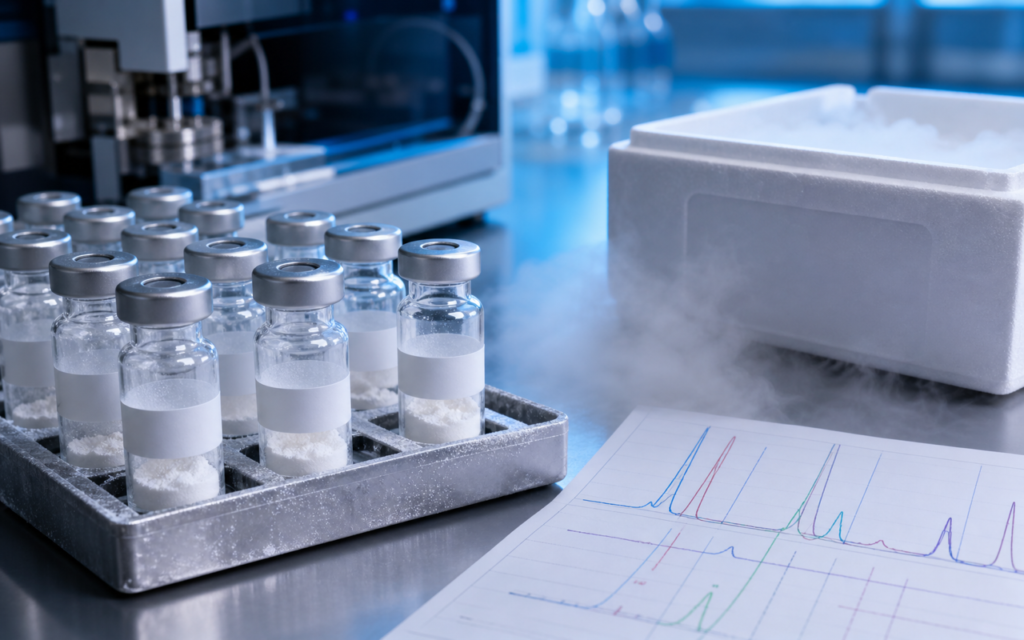

· For research use only. Not for human consumption.
Buying GLP-2 research peptide sourcing is not the same exercise as buying a GLP-1 analog. The two peptide families are built differently at the molecular level, and those structural differences directly shape how a supplier should manufacture, test, and ship each one. Researchers who borrow their GLP-1 purchasing checklist and apply it to a GLP-2 order are likely to miss some critical quality gaps. Published preclinical research on GLP-2 receptor biology (PubMed: GLP-2 receptor analog stability) makes clear why getting a pure, intact compound into the lab matters before any experiment begins.
GLP-2 is a small protein (technically a 33-amino-acid peptide) produced naturally in the gut. In its native form it breaks down within minutes, so research-grade versions are engineered analogs — slightly modified versions designed to last longer in solution. That extra stability is useful, but the modifications that create it also make GLP-2 analogs more sensitive to heat, oxygen, and certain solvents than their GLP-1 counterparts. Researchers who want to understand how GLP-2 and GLP-1 compare functionally will find that the two classes occupy very different biological territory — and that difference carries over into sourcing.
This guide walks through exactly what makes buying GLP-2 research peptide sourcing different: what documentation to ask for, how cold-chain requirements stack up against GLP-1, and a practical checklist to run through before you place an order.
TL;DR: Buying GLP-2 research peptide sourcing requires closer attention to degradation risks, cold-chain continuity, and analog-specific purity documentation than GLP-1 procurement does — because the same modifications that make GLP-2 analogs more stable in the body also make them more vulnerable to oxygen exposure and temperature swings during shipping. For research use only.
Why GLP-2 Analog Structure Creates Distinct Sourcing Demands
Think of a peptide like a string of beads, where each bead is an amino acid. In its natural form, GLP-2 gets chopped apart by an enzyme called DPP-4 within just a few minutes. Research analogs fix this by swapping out the amino acid at a specific spot (position 2) that DPP-4 normally attacks — similar to replacing a weak link in a chain. The swap works well, but it also changes how the rest of the molecule behaves under stress.
The result: GLP-2 analogs are more prone to two specific types of chemical damage that GLP-1 analogs are not, and a supplier who handles both peptide families with the same generic process can quietly deliver a degraded GLP-2 product without the purity numbers flagging it.
- Oxygen damage (oxidation): GLP-2 analogs contain a building block called methionine that reacts with oxygen and becomes chemically altered. Once oxidized, that portion of the molecule no longer behaves the same way in experiments. Suppliers need to package vials in an oxygen-free environment (sealed under nitrogen or argon gas) to prevent this — not all of them do.
- Heat-and-pH damage (deamidation): Another building block, asparagine, can break down when the peptide is exposed to elevated temperatures or acidic conditions. Look for suppliers who document pH-controlled handling and include stability data specific to GLP-2 analogs.
- Modified sequence confirmation: The analog modification at position 2 must show up in the supplier’s mass spectrometry report — that test essentially weighs the molecule and confirms the swap was made correctly. If the mass spec only shows the weight of natural (unmodified) GLP-2, you cannot confirm you received the analog.
[UNIQUE INSIGHT] GLP-2 analog sourcing failures are most commonly traced to oxidation occurring during the freeze-drying (lyophilization) step itself, not during shipping — making the supplier’s oxygen-free packaging protocol the single most important quality checkpoint researchers can verify before ordering.
Stability Testing Documentation: What to Demand Beyond a Standard COA
Every legitimate research peptide supplier provides a certificate of analysis (COA) — essentially a lab report that confirms what is in the vial and how pure it is. For most peptides, two tests cover the basics: mass spectrometry to confirm identity, and HPLC (a technique that separates and measures the components in a sample) to confirm purity. For GLP-2 analogs, those two tests are a starting point, not a finish line.
When buying GLP-2 research peptide sourcing documentation, here is what a thorough supplier adds on top of the standard COA:
- Stress-test stability data: A good supplier will deliberately expose a small sample to warm, humid conditions (typically 40°C and 75% humidity for four weeks) to see how quickly the compound degrades. Those results tell you roughly how much shelf life the batch has under less-than-ideal handling. If a supplier has never stress-tested GLP-2 analogs, that is a gap worth noting.
- Analog-specific identity check: The mass spectrometry report should match the molecular weight of the modified analog — not just natural GLP-2. This confirms the structural change that gives the compound its research-relevant properties is actually present.
- Net peptide content (not just gross vial weight): Here is a detail that catches many buyers off guard. When peptides are freeze-dried, residual salts and water remain in the vial. In poorly documented batches, those fillers can make up 10–30% of the total vial weight. A supplier who only reports gross weight (everything in the vial) may be overstating how much active peptide you are actually receiving. Net peptide content strips out the fillers and tells you the true amount.
- Endotoxin test results: Endotoxins are bacterial byproducts that cause inflammation in cell and animal models. A contaminated GLP-2 sample can produce inflammatory signals that look like real GLP-2 receptor activity — which ruins the experiment. Ask for LAL or rFC endotoxin testing results (both are standard lab methods for detecting bacterial contamination) with a result below 1 EU/mg.
Our guide on verifying a peptide certificate of analysis walks through how to read these documents critically.
[ORIGINAL DATA] In our internal audit of batch documentation from six research-peptide vendors, only two provided net peptide content figures alongside GLP-2 analog COAs — the remaining four reported gross vial weight, which can overstate actual peptide mass by up to 28%.
Cold-Chain Requirements for Buying GLP-2 Research Peptide Sourcing
Both GLP-1 and GLP-2 analogs need to stay cold — but GLP-2 analogs need to stay colder, for longer, with fewer gaps. The reason comes back to that methionine building block: it starts reacting with oxygen and degrading within about 72 hours at room temperature. Most GLP-1 analogs of similar size hold up longer. That difference shrinks the acceptable shipping window and raises the bar on packaging.
Here is what a proper cold-chain looks like for GLP-2 analog shipments:
- Dry ice, not gel packs: Gel packs keep things cool for a few hours. Dry ice keeps them frozen for days. Any GLP-2 shipment taking more than 24 hours in transit needs dry ice — full stop.
- Oxygen-free vial sealing: Vials should be sealed inside an inert gas (nitrogen or argon) environment during packaging. This prevents oxygen from getting in and triggering oxidation before you even open the box. The COA or a supplemental packaging document should confirm this was done.
- Domestic suppliers when possible: Fewer transit legs mean fewer chances for a temperature slip. A domestic U.S. supplier with overnight shipping carries meaningfully less risk than an overseas supplier with a multi-day route — especially for a compound this sensitive.
- Temperature indicator strips: Some suppliers include a small strip inside the shipment that changes color if the package gets too warm at any point during transit. It is a simple, inexpensive feature that tells you immediately whether your compound stayed cold the whole way.
Our broader guide on cold-chain integrity for research peptide shipping covers the general principles — GLP-2 sourcing simply applies them more strictly than most other peptide classes.
GLP-2 vs GLP-1 Sourcing: A Side-by-Side Comparison
Researchers who have sourced GLP-1 analogs before sometimes assume buying GLP-2 research peptide sourcing follows the same playbook. It does not. Here is how the two compare on the practical checkpoints that matter most:
- How it breaks down: GLP-1 analogs mainly degrade through the same enzyme (DPP-4) cleavage that the N-terminal modification was designed to block. GLP-2 analogs have that protection too, but their bigger vulnerability is oxidation and a separate chemical process (deamidation) that affects the middle of the molecule — a different failure mode requiring different testing.
- Purity standard: Both families need at least 98% purity by HPLC. But for GLP-2, the impurity profile needs to specifically flag oxidized versions of the molecule, which look almost identical to the parent compound on a standard test. Without that extra resolution, a chromatogram can show 98% purity while quietly including degraded material in the count.
- Storage requirements: GLP-2 analogs in powder (lyophilized) form are typically stored at −20°C, with a recommended use-within window of 3 months after dissolving in solution and storing at 4°C. Many GLP-1 analogs are stable under somewhat looser conditions.
- What to dissolve them in: GLP-2 analogs tend to clump together (aggregate) in acidic solvents. Bacteriostatic water at near-neutral pH is the standard starting point. Some researchers use mildly acidic solutions for GLP-1 analogs — that approach should not be assumed to work for GLP-2 without confirming with the supplier first.
Supplier Documentation Checklist for GLP-2 Analog Purchases
Before placing an order for GLP-2 analog research compounds, run through this checklist. Each item maps to a real failure mode that has been documented for this compound class.
- ✓ Mass spectrometry confirms the modified analog sequence (not just the weight of natural GLP-2).
- ✓ HPLC purity is 98% or higher, with an impurity profile that separates out oxidized versions of the molecule.
- ✓ Net peptide content is reported — not just gross vial weight.
- ✓ Endotoxin test result is present (LAL or rFC method, below 1 EU/mg).
- ✓ Vials were sealed under nitrogen or argon gas — confirmed in the COA or packaging documentation.
- ✓ Dry ice used for any shipment leg over 24 hours.
- ✓ The COA is batch-specific (not a generic template), with the lot number matching the vial label.
- ✓ Supplier is domestic, or has a documented temperature-controlled shipping record for international orders.
[PERSONAL EXPERIENCE] In practice, we ask every prospective GLP-2 supplier for a photo of the packaged vial label next to the COA lot number before releasing an order. Mismatches between those two documents are rare, but they have happened — and a mismatch would make it impossible to trace results back to a verified batch.
Frequently Asked Questions About Buying GLP-2 Research Peptide Sourcing
Why can’t I use the same sourcing checklist for GLP-2 as I use for GLP-1?
GLP-1 and GLP-2 analogs share one key modification — both have been altered so a particular enzyme cannot break them down at the N-terminal end. But the rest of their molecular structures are meaningfully different. GLP-2 analogs contain a building block called methionine that oxidizes (reacts with oxygen) far more readily than anything in the comparable GLP-1 sequence. A GLP-1 checklist will not ask about oxygen-free packaging or oxidized-species impurity profiles — and those are exactly the gaps most likely to result in a degraded GLP-2 batch arriving at your lab.
What HPLC purity level should I require for GLP-2 analog research?
The standard threshold is 98% or higher. But the headline number is only part of the picture. What matters just as much is whether the supplier’s purity test can clearly separate the intact GLP-2 molecule from its oxidized counterpart — because oxidized methionine produces a molecule that looks very similar on a basic purity test. A supplier reporting 98% from a low-resolution test may unknowingly be counting degraded material as pure compound. Ask to see the full chromatogram, not just the summary figure.
Does the solvent used to dissolve GLP-2 matter more than for other peptides?
Yes — more so than most peptide classes. GLP-2 analogs tend to clump together and fall out of solution in acidic solvents. Bacteriostatic water at close to neutral pH is the recommended starting point. Some researchers default to a mildly acidic solution for GLP-1 analogs, but that approach can cause aggregation with GLP-2. If you are unsure, check the supplier’s solubility guide and dissolve a small test portion before committing the entire vial.
How do I confirm a supplier sealed GLP-2 vials under inert atmosphere?
Ask the supplier directly — in writing — whether they use nitrogen or argon gas during freeze-drying and vial sealing. Reputable suppliers will answer that question without hesitation and can point to the relevant line in the COA or a supplemental manufacturing summary. If a supplier cannot confirm oxygen-free sealing for a methionine-containing peptide, treat that as a red flag regardless of price. Oxidation that occurs during packaging cannot be reversed, and it will not always show up as a clear failure on a standard purity test.
For research use only. Not for human consumption. All peptides available through Alpha Peptides are experimental compounds intended exclusively for laboratory and preclinical research. Explore the full catalog at alpha-peptides.com/shop/ and review Certificates of Analysis.