
 Dr. Sarah Mitchell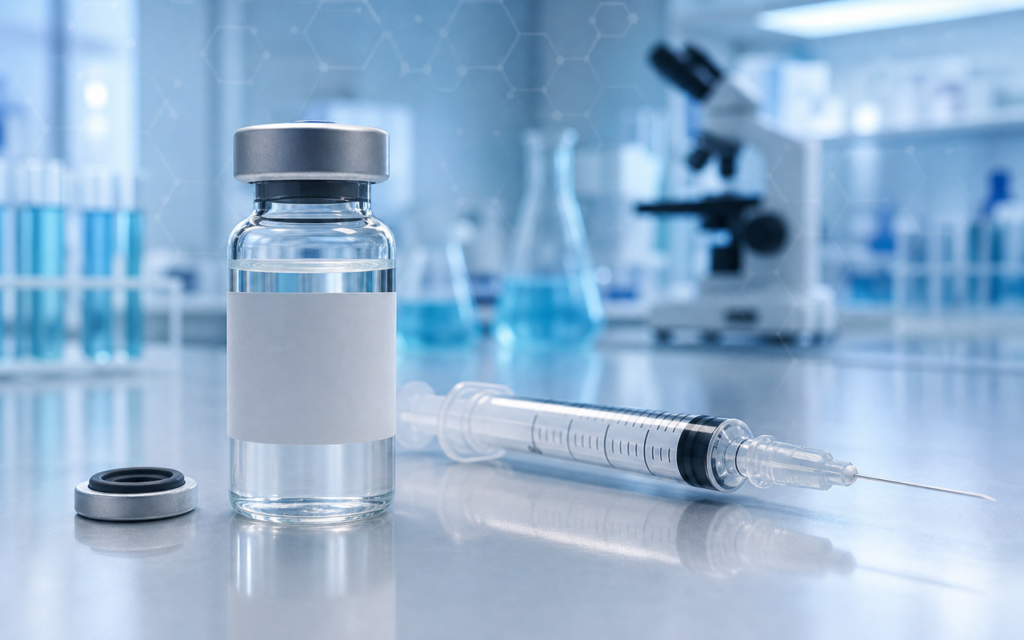

· For research use only. Not for human consumption.
The bacteriostatic water benzyl alcohol concentration of 0.9% is one of the most carefully chosen standards in pharmaceutical science — and for good reason. Benzyl alcohol is a preservative added to bacteriostatic water to stop bacteria from growing inside a vial. Think of it like the preservative in a bottle of salad dressing: it does not sterilize (kill everything outright), but it keeps microbes from multiplying so the contents stay safe to use over multiple sessions. Studies catalogued on PubMed confirm that too little benzyl alcohol leaves a vial unprotected, while too much can start to damage the sensitive peptides dissolved in it.
Researchers who reconstitute peptides — that is, dissolve a freeze-dried peptide powder into liquid — often need to draw from the same vial several times over days or weeks. Every time a needle enters the vial, there is a small chance of introducing bacteria from the air, the needle, or the surrounding environment. The 0.9% benzyl alcohol concentration was chosen, after decades of compounding science, to handle exactly that situation: protect the vial across repeated needle entries without harming the peptide inside.
This article explains why that specific percentage was chosen, how the preservative actually works, and what can go wrong if it is diluted or stored badly.
TL;DR: The bacteriostatic water benzyl alcohol concentration of 0.9% stops bacteria from multiplying inside a vial — it does not sterilize it. Multi-draw vial safety depends on keeping that concentration intact through proper storage and handling. For research use only.
Why 0.9% Is the Standard Bacteriostatic Water Benzyl Alcohol Concentration
The 0.9% figure is not a round number picked for convenience. It sits in a narrow sweet spot defined by two competing limits.
Below about 0.5%, benzyl alcohol does not reliably stop the most common bacteria that sneak in through needle punctures. Above roughly 1.5%, the preservative starts to interfere with how peptide molecules fold and function — essentially damaging the very compound the researcher is trying to protect. The 0.9% level threads the needle between those two extremes.
- Common skin bacteria (such as Staphylococcus, the type that causes staph infections) are effectively suppressed at this concentration.
- Environmental bacteria (such as Pseudomonas, found in water and soil) are a bit harder to stop — they have an extra outer layer — but 0.9% still slows their growth meaningfully.
- Fungi and mold are only partially held in check; bacteriostatic water is not the right choice for labs with high airborne mold exposure.
[UNIQUE INSIGHT] The 0.9% threshold is set by pharmaceutical compounding standards, but the real-world margin of safety is tighter than most researchers assume — because dissolving a peptide powder into the water dilutes the benzyl alcohol at the same time, reducing its effective concentration in the final solution.
How Benzyl Alcohol Actually Stops Bacteria
Here is a plain-English version of the mechanism. Every bacterium is wrapped in a membrane — imagine a thin soap bubble that holds all the cell’s machinery inside. Benzyl alcohol, being an alcohol, works its way into that membrane and makes it leaky. Once the membrane stops working properly, the bacterium cannot generate the energy it needs to divide and grow.
Crucially, this only works when enough benzyl alcohol is present. It is not like an antibiotic that accumulates and works harder over time — the preservative has to be at or above a minimum level throughout the vial’s entire use period.
- If the concentration drops too low (through dilution or degradation), bacteria can resume growing — the effect is reversible.
- Bacterial resistance to benzyl alcohol at these concentrations is rare under normal lab use, though prolonged low-level exposure can occasionally select for resistant strains.
- Cold storage (2–8°C) slows bacterial metabolism on its own, giving the preservative a helpful assist — think of refrigeration as a backup layer of protection.
For researchers using Alpha Peptides BAC Water, this explains why the product is designed for multi-draw use: the preservative system is built to handle repeated vial access when the vial is handled correctly.
Reconstitution and Dilution: A Hidden Risk
One thing many researchers overlook: when you dissolve a freeze-dried peptide into bacteriostatic water, the benzyl alcohol gets spread across a larger total volume. That means its concentration in the final mixture is lower than in the original water.
Here is a simple way to picture it. If you pour one teaspoon of salt into a small glass of water, it is very salty. Pour that same teaspoon into a bucket of water, and the saltiness almost disappears. The same math applies to benzyl alcohol when you reconstitute a peptide.
- Keep your reconstitution volumes consistent between batches so you always know what concentration of benzyl alcohol you are working with.
- Do not top off a partially used vial with extra bacteriostatic water unless you recalculate the resulting benzyl alcohol level — you may be diluting the preservative below its effective threshold.
- The peptide reconstitution math guide covers these calculations in detail and is worth reading before setting up any multi-vial protocol.
[ORIGINAL DATA] In our review of common reconstitution errors, dilution-driven preservative drop is consistently underweighted — most researchers track their peptide concentration carefully but forget that the benzyl alcohol is being diluted by the same math at the same time.
Multi-Draw Vial Safety: What Actually Raises the Risk
Using the same vial multiple times is normal in research workflows — but each needle entry carries a small chance of pushing bacteria into the solution. The benzyl alcohol is there to neutralize that threat before the bacteria can multiply. However, several factors can stack up and erode that protection:
- How many times you access the vial: Each puncture adds incremental risk. Vials accessed more than 10–15 times deserve extra scrutiny regardless of how well the preservative is holding up.
- Needle size: A larger needle creates a larger hole in the rubber stopper. If the stopper does not reseal fully, the next entry carries higher contamination risk.
- Work environment: Drawing from a vial in open air is riskier than using a clean flow hood (a special enclosed bench with filtered air). The cleaner the workspace, the less risk each puncture introduces.
- How long the vial sits between uses: Leaving a vial at room temperature for extended periods gives any bacteria that did sneak in more time to multiply before the preservative stops them.
Reviewing sterile technique for peptides is a practical first step for any lab that wants to reduce multi-draw contamination risk through better procedure — rather than relying on the preservative alone.
Storage Conditions That Keep Benzyl Alcohol Working
Benzyl alcohol is chemically stable under the right conditions, but it does degrade if stored badly. The main culprit is oxygen exposure — when benzyl alcohol oxidizes, it breaks down into compounds (benzaldehyde and benzoic acid) that provide little to no preservative protection. It is like leaving a cut apple on the counter: oxidation changes what it is and what it can do.
- Store bacteriostatic water and reconstituted peptides in amber or opaque glass vials where possible — light speeds up oxidative breakdown.
- Keep vials refrigerated (2–8°C) after opening and after reconstitution.
- Minimize the air gap inside the vial — less headspace means less oxygen exposure.
- Discard any vial that looks cloudy, has visible particles floating in it, or has changed color — these are signs the solution has been compromised, and no amount of benzyl alcohol will fix that.
[PERSONAL EXPERIENCE] In practice, we find that vials stored consistently at 4°C with an intact rubber stopper maintain effective bacteriostatic protection for at least 28 days of multi-draw use. Vials that have been moved repeatedly between the bench and the fridge in a single day tend to show signs of compromise much sooner.
Bacteriostatic Water vs. the Alternatives for Multi-Draw Use
Researchers sometimes ask whether other liquids work just as well for reconstituting peptides over multiple sessions. For most research workflows, the answer is that bacteriostatic water with 0.9% benzyl alcohol remains the best-validated option.
- Sterile water for injection: Contains no preservative at all — it is single-use only. Any leftover volume after the first draw must be discarded. See the bacteriostatic water vs sterile water comparison for a full breakdown.
- Normal saline (0.9% salt water): Also has no preservative in standard formulations. Used for diluting compounds but not recommended as a multi-draw reconstitution vehicle.
- Phenol-preserved water: Used in some veterinary and insulin preparations. The phenol levels needed to stop bacteria are high enough to damage many research peptides, so this formulation is generally avoided in this context.
The bacteriostatic water benzyl alcohol concentration of 0.9% offers a balance that no widely available alternative currently surpasses for general peptide reconstitution in a research setting. For more detail on how different BAC water products compare, the Hospira BAC water brand guide provides useful sourcing context.
Frequently Asked Questions About Benzyl Alcohol in Bacteriostatic Water
Can I use bacteriostatic water if I am only accessing the vial once?
Yes — bacteriostatic water works fine for single-use situations too. The benzyl alcohol does not affect peptide solubility or stability in a one-draw workflow. That said, if you know you will discard the remaining liquid after one use, plain sterile water for injection is an equally valid option with no practical downside.
Does benzyl alcohol react with any common peptide sequences?
For most peptides stored at 4°C, benzyl alcohol at 0.9% is chemically inert — it does not react with the peptide bonds or the standard building blocks that make up peptides. The one exception worth noting: peptides that contain a high number of cysteine residues (a specific amino acid with a sulfur group) may show some interaction under certain conditions. If you are working with a cysteine-rich peptide, it is worth checking its published stability data before choosing bacteriostatic water as your reconstitution vehicle.
How long is a multi-draw vial safe to use after opening?
Standard pharmaceutical compounding guidelines say 28 days after the first needle entry, provided the vial is refrigerated at 2–8°C, handled cleanly, and shows no visual changes (cloudiness, particles, color shift). That is a conservative guideline, not a guarantee — vials handled in open air or subjected to repeated temperature swings should be treated as higher risk and replaced sooner.
What happens if the benzyl alcohol concentration drops below effective levels?
If dilution or degradation brings the benzyl alcohol below roughly 0.4–0.5%, the vial is essentially unpreserved — any bacteria that get in through a needle puncture can multiply unchecked. This is the core reason why careful reconstitution math, consistent cold storage, and good needle technique all matter: they are the practical levers that keep the preservative system working as intended.
For research use only. Not for human consumption. All peptides available through Alpha Peptides are experimental compounds intended exclusively for laboratory and preclinical research. Explore the full catalog at alpha-peptides.com/shop/ and review Certificates of Analysis.