Research Applications
Selank vs Semax: A Detailed Comparison of Two Brain Peptides
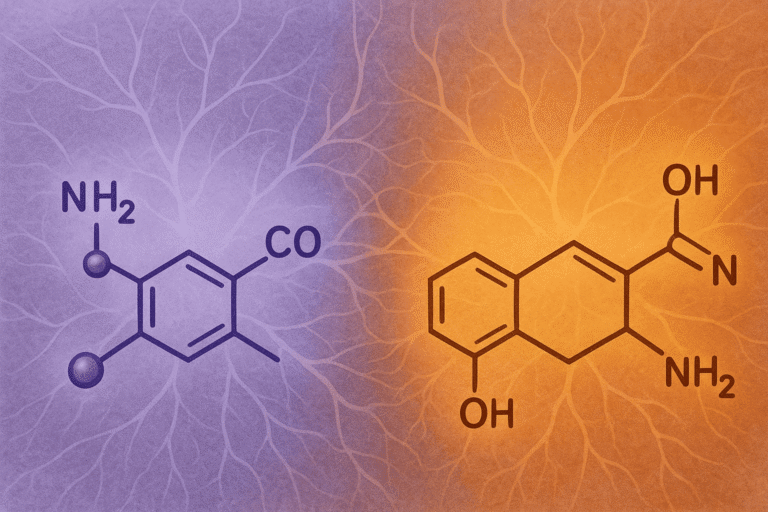
Selank modulates GABA pathways while Semax affects dopamine and BDNF. Here’s a detailed side-by-side comparison of these two Russian-developed neuropeptides.
Research Blog
Selank modulates GABA pathways while Semax affects dopamine and BDNF. Here’s a detailed side-by-side comparison of these two Russian-developed neuropeptides.
Research peptides come in various vial sizes from 2mg to 50mg. Here’s how to choose the right size for your research needs,…
Cloudiness, discoloration, unusual odor, and failed assays can all indicate peptide degradation. Here’s how to identify degraded peptides and what causes them…
Lyophilized peptides stored at -20°C can last years, while reconstituted peptides at 2-8°C last days to weeks. Here’s a complete guide to…
Reconstituting peptides requires calculating the right amount of solvent for your desired concentration. Here’s the math, common formulas, and worked examples for…
UV and visible light can degrade certain peptide bonds and amino acid residues. Here’s which peptides are most light-sensitive, what happens during…
Repeated freezing and thawing degrades reconstituted peptides. Here’s the science behind freeze-thaw damage, how many cycles peptides can tolerate, and how aliquoting…
Bacteriostatic water contains 0.9% benzyl alcohol to inhibit bacterial growth, while sterile water does not. Here’s when to use each and why…
Research peptides occupy a specific legal category in the United States. Here’s a plain-English guide to the current regulatory framework and what…
Brain peptide research in 2026 spans Selank, Semax, and emerging neuropeptides. Here’s a roundup of the latest published studies and what the…