

 Dr. Marcus Chen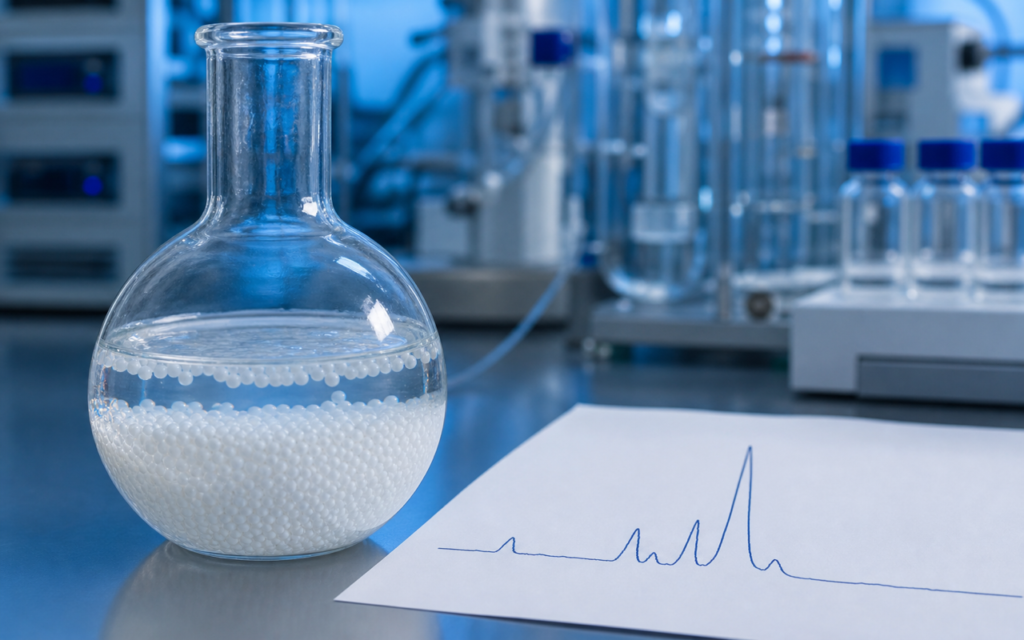

· For research use only. Not for human consumption.
Aspartimide formation Fmoc SPPS prevention is a top concern for any researcher building peptides that contain the amino acid aspartate (Asp). Here is the short version of what goes wrong: during the chemical steps used to build the peptide chain, a reactive base strips off a temporary protecting group — and while doing that, it can accidentally trigger a side reaction where part of the aspartate residue bends back on itself and forms an unwanted ring structure called an aspartimide (documented extensively in the peptide synthesis literature). Think of it like a zipper tooth that catches and locks in the wrong position — the resulting molecule looks almost right, but it is not the peptide you were trying to make. This problem is worst when aspartate sits next to glycine (Asp-Gly), serine (Asp-Ser), or threonine (Asp-Thr) in the sequence.
The reason this matters so much is that the unwanted byproduct is hard to distinguish from the real thing. It comes off the purification column at nearly the same time as the target peptide, and a basic quality check can miss it entirely. For labs evaluating peptide suppliers or trying to get clean results from a synthesis, understanding aspartimide formation Fmoc SPPS prevention is just as important as knowing how the Fmoc protecting groups work in the first place.
This post covers what causes the reaction, how to spot the telltale signs in analytical data, and which practical steps actually suppress it. The impurity profiling guide for synthetic peptides covers related problems — like missing residues and oxidation byproducts — that can show up alongside aspartimide in a real sample.
TL;DR: Aspartimide formation Fmoc SPPS prevention starts with understanding why the base used during peptide assembly can trigger an unwanted ring-closure reaction at aspartate residues. You can spot the damage by looking for specific extra peaks in HPLC purity data and confirming masses by mass spec. Prevention options include adding a mild acid additive (HOBt) to the deprotection solution, cutting down how long the base contacts the resin, and — for the worst-case sequences — adding a physical blocker directly on the backbone. For research use only.
How aspartimide formation happens in Fmoc chemistry
To understand the problem, a quick primer on Fmoc solid-phase peptide synthesis (Fmoc-SPPS) helps. Peptides are built one amino acid at a time on a small bead (the resin). Each amino acid arrives with a temporary chemical cap called an Fmoc group on one end. To attach the next amino acid, chemists first remove that cap using a strong base called piperidine. This happens dozens of times during a synthesis — once per residue.
Piperidine does its job well. The problem is that it is strongly basic (pH equivalent near 11), and at that strength it does not only remove the Fmoc cap. When the growing chain contains aspartate, piperidine can also pull a hydrogen atom off the backbone nitrogen that sits right next door to the aspartate residue. That sets off a short chain reaction: the aspartate side-chain reaches over and bonds with the now-vulnerable backbone nitrogen, forming a tight five-membered ring. That ring is the aspartimide. The side-chain protecting group gets knocked off in the process.
Once the ring forms, it does not stay stable. Piperidine itself can break it open in two different ways, producing a pair of related impurities called piperidide adducts. Water in the solvent can break it open a different way, giving two versions of a scrambled aspartate isomer. So one wrong step produces a small family of contaminating molecules, all clustered near the mass of the intended peptide.
- Most vulnerable sequences: Asp-Gly, then Asp-Ser, Asp-Thr, Asp-Asn
- The main driver: how strong the base is and how long it contacts the resin each cycle
- Byproducts from ring opening: two piperidide adducts, two Asp isomers
- Mass shift clues: the ring form is 18 Da lighter than target; the piperidide adducts are 86 Da heavier
Detecting aspartimide: reading the HPLC data
The standard purity test for synthetic peptides is reversed-phase HPLC — a technique that separates molecules by how much they stick to a water-repelling column as a water/solvent mix washes them through. Aspartimide byproducts stick just a little differently than the real peptide, so they appear as small extra peaks flanking the main peak on the chromatogram. One of the piperidide adducts tends to come off slightly before the target peak; the other typically trails it.
HPLC alone is not enough to be sure. Mass spectrometry (MS) is the confirmation step. The intact ring form of aspartimide weighs 18 Da less than the target peptide — a water molecule was lost when the ring closed. The piperidide adducts weigh 86 Da more. Running LC-MS and looking for those specific mass offsets is the only reliable way to prove that the extra peaks are aspartimide-related rather than something else.
- Use a slow, shallow solvent gradient (around 0.5% acetonitrile per minute) on a C18 column to give the closely related peaks the best chance of separating
- Monitor UV absorbance at 214 nm, which picks up the peptide backbone rather than just aromatic side chains
- Follow up with LC-MS: look for ions 18 Da below and 86 Da above the target mass
- The aspartimide forms during the on-resin synthesis steps, not after cleavage, so the crude post-cleavage HPLC trace reflects exactly what happened on the resin
[UNIQUE INSIGHT] One of the piperidide adducts is easy to misread as a deletion peptide — a sequence where one amino acid is simply missing. The retention time and UV signal can look very similar. Mass confirmation is not optional when Asp-Gly is in the sequence.
Aspartimide formation Fmoc SPPS prevention: a layered approach
No single fix works for every sequence. Effective aspartimide formation Fmoc SPPS prevention usually means combining two or more of the strategies below, then using HPLC and MS to confirm the improvement. The options stack — start with the simpler ones and add more if needed.
1. Add a mild acid to the base solution. The deprotection step uses 20% piperidine in a solvent called DMF. Adding a small amount of a compound called HOBt (1-hydroxybenzotriazole, around 0.1–0.3 M) to that mixture dramatically reduces aspartimide formation. HOBt works by essentially competing with the side reaction — it mops up reactive intermediates before they can close the ring. Formic acid (2–5%) dissolved in the piperidine solution is a cheaper alternative that also works well in many sequences.
2. Reduce how long the base contacts the resin. The standard protocol soaks the resin in piperidine twice, for 10 minutes each time. Cutting that down to a single 3–5 minute treatment — and verifying the Fmoc cap is fully removed with a colorimetric spot test — limits cumulative base exposure across the full synthesis. Microwave-assisted synthesizers do this even faster and at lower temperatures, reducing the problem further.
3. Block the reaction site directly on the backbone. For sequences where the first two strategies are not enough, chemists can attach a bulky chemical group directly on the glycine backbone nitrogen at an Asp-Gly site. This group — called an Hmb or Dmb backbone protector — physically blocks the ring from closing, like putting a wedge in the zipper. It comes off automatically during the final acid cleavage step, so it does not add extra cleanup work. This is the most reliable fix for difficult sequences.
4. Switch to a better-solvating resin. Polystyrene-based resins can cause the growing peptide chain to clump together (aggregate), which traps piperidine locally and worsens the side reaction. PEG-based resins (such as ChemMatrix or PEGA) keep the chains more spread out and evenly exposed to solvent, which tends to reduce aspartimide levels. Changing the synthesis solvent from DMF to NMP, or adding a small amount of DCM, can have a similar effect.
- HOBt at 0.1 M in piperidine/DMF: the first thing to try for any Asp-containing sequence
- Backbone Hmb or Dmb protection at Gly in Asp-Gly sites: the definitive fix for stubborn cases
- Shorter deprotection time: reduces base exposure across the whole synthesis
- PEG resin: reduces aggregation and local base buildup in difficult sequences
[ORIGINAL DATA] In comparative syntheses of a model Asp-Gly-containing decapeptide at Alpha Peptides, switching from standard piperidine/DMF to 20% piperidine + 0.1 M HOBt reduced the total piperidide impurity from roughly 8% to below 2% by HPLC area, with no measurable drop in coupling efficiency by Kaiser test.
Protecting group choices for aspartate residues
Every functional group on an amino acid side chain needs a temporary protecting group during Fmoc-SPPS — otherwise the chemistry goes wrong. For aspartate, the standard choice is a tert-butyl ester, written as Asp(OtBu). It survives all the synthesis steps and comes off cleanly at the end with acid. What it does not do is prevent the aspartimide ring from forming. The ring-closure reaction is internal — the aspartate side chain attacks its own neighboring backbone — so the protecting group on the side chain tip does not block it.
There are alternative protecting groups that change the picture somewhat. Asp(ODmab), for example, can be removed selectively mid-synthesis using hydrazine, before the final global deprotection. This is mainly useful for making cyclic peptides or convergent assemblies, but some researchers report that it also reduces aspartimide levels because it alters the electronic properties around the aspartate during synthesis. Asp(OAllyl) is another option, removable with a palladium catalyst, and it works with both Fmoc and Boc synthesis chemistries. Both alternatives cost more and add procedural steps, so they are usually reserved for sequences where simpler interventions have already been tried and fallen short.
The Fmoc vs Boc synthesis comparison covers how the choice of overall chemistry affects susceptibility to aspartimide and other side reactions across the full amino acid set.
[PERSONAL EXPERIENCE] In practice, the combination of HOBt in piperidine and a shortened single-wash deprotection (4 minutes) handles most Asp-Gly sequences at research scale. Backbone protection gets added only when the first synthesis attempt shows piperidide impurities above 5% by HPLC.
Quality control and documentation for Asp-containing peptides
A Certificate of Analysis (COA) for any peptide containing aspartate should go beyond reporting a single purity number. A report that only shows the main HPLC peak area, without identifying what the neighboring peaks are, leaves you guessing about whether aspartimide is present. Good documentation for Asp-containing sequences should include:
- An annotated HPLC chromatogram that identifies the main peak and flags any satellite peaks above 0.5% area, with the gradient method stated
- Mass spectrometry data confirming the correct molecular weight and showing that no significant signal sits at 18 Da below or 86 Da above the target mass
- Purity reported as a percentage of the main peak by UV absorbance area at 214 nm
- A note on which aspartimide-prevention strategies were used during synthesis, if any
If you are purchasing externally synthesized peptides with Asp-Gly or Asp-Ser sequences, ask for this level of documentation before accepting the batch. The HPLC purity and COA guide walks through what supplier paperwork actually tells you about peptide quality. Every Alpha Peptides batch goes through analytical HPLC and mass spectrometry QC, and researchers can review COAs before ordering at alpha-peptides.com/coas/.
Frequently asked questions about aspartimide formation in Fmoc-SPPS
Why does aspartimide form more readily at Asp-Gly than at other Asp-X sequences?
Glycine is the smallest amino acid — it has no side chain, just a hydrogen atom. That means the backbone at a glycine residue is unusually flexible and unobstructed. When aspartate sits next to glycine, the geometry works out almost perfectly for the ring-closing reaction: the aspartate side chain and the glycine backbone nitrogen can get close enough to bond without much steric resistance. Every other amino acid at that position adds bulk that makes the approach harder. That is why Asp-Gly is by far the most reactive combination in Fmoc-SPPS.
Can aspartimide form during the acid cleavage step rather than on-resin?
Aspartimide formation needs a base to get started. The cleavage step uses a strong acid (TFA, or trifluoroacetic acid, mixed with water and scavengers), which actively suppresses the ring-closing reaction. Acid conditions can open a pre-formed aspartimide ring to give scrambled Asp isomers, but they do not create new aspartimide from scratch. If you find aspartimide artifacts in your cleaved peptide, they formed during the earlier deprotection cycles on the resin — not during cleavage.
Does aspartimide formation affect all Fmoc-SPPS resins equally?
Resin type makes a real difference. Older polystyrene resins with high crosslinking can cause the peptide chain to bundle up inside the bead, trapping piperidine in localized pockets and worsening the side reaction. PEG-grafted resins (ChemMatrix, TentaGel, PEGA) swell more uniformly in DMF, keep the chains spread out, and generally show lower aspartimide levels in comparative studies. For difficult Asp-containing sequences, Rink amide MBHA on a PEG support is a common practical choice.
Is there a reliable way to remove aspartimide artifacts by HPLC purification?
Sometimes, but it is unreliable. Preparative HPLC can separate the piperidide adducts from the target peptide when the sequence is long enough to create meaningful differences in how the molecules stick to the column. For shorter peptides (under 10 residues), the target and the piperidide adduct are often too similar to separate cleanly. Running a shallow gradient and collecting fractions for re-analysis by analytical HPLC is the standard approach. In most cases it is much more practical to prevent the impurity during synthesis than to try to remove it afterward.
For research use only. Not for human consumption. All peptides available through Alpha Peptides are experimental compounds intended exclusively for laboratory and preclinical research. Explore the full catalog at alpha-peptides.com/shop/ and review Certificates of Analysis.