

 Dr. Marcus Chen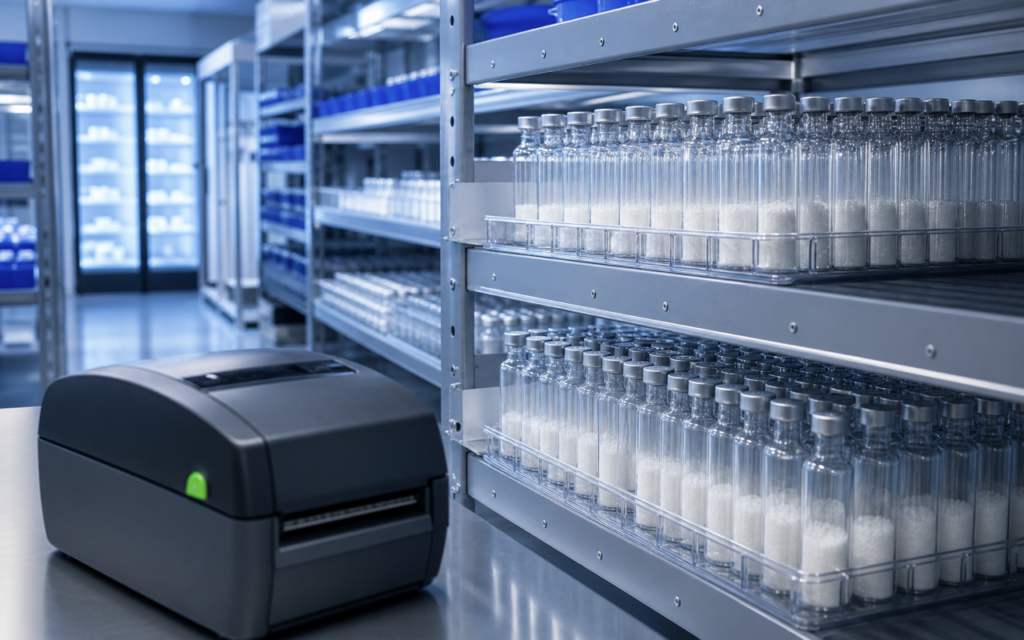

· For research use only. Not for human consumption.
Domestic peptide supplier inventory shipping is one of the most overlooked details in running a smooth research program—and most labs only notice it after a shipment gets stuck at customs or arrives weeks late. When every experiment follows a tight schedule, the gap between a US-based warehouse and an overseas fulfillment center can mean the difference between a productive quarter and a frustrating standstill. Research on how peptides hold up during storage and transit (see PubMed: peptide storage and stability research) shows that keeping a compound at the right temperature from the moment it leaves the supplier all the way to the lab is just as important as the compound itself.
In this post, we walk through the real differences in delivery speed between ordering from a US-based supplier versus ordering internationally, explain the risks of customs holds and temperature exposure, and share a simple framework for keeping research on track no matter what the supply chain throws at you.
All peptides discussed here are experimental compounds intended strictly for laboratory and preclinical (pre-human) research use. Nothing in this post is medical or therapeutic advice.
TL;DR: Choosing a supplier with domestic peptide supplier inventory shipping infrastructure typically cuts delivery down to 2–5 business days, compared to 2–6 weeks for international orders. It also removes nearly all customs risk and lets researchers order smaller, fresher batches as needed rather than stockpiling large amounts. For research use only.
Why Delivery Speed Is a Research Variable, Not Just a Convenience
Think of research peptides the way a restaurant thinks of fresh ingredients. If the delivery is late, the whole meal gets pushed back. A delayed compound can throw off an entire experiment—wasting time, money, and effort.
When a lab orders internationally, just the shipping window can take 10–21 business days under normal conditions. And that assumes no hold at customs, no carrier delays during busy seasons, and no temperature problems in transit. Each of those problems is independent of the others, so the real odds of a perfectly clean international delivery are lower than you might expect.
Ordering from a domestic supplier with stock already warehoused in the US collapses that window dramatically. A US supplier can ship the next business day via overnight courier. Most researchers receive their order in 1–3 days, with full temperature-monitoring documentation and a clear record of how the package was handled from the warehouse to their door.
- International average delivery time: 14–28 calendar days (including customs processing)
- Domestic average delivery time: 2–5 business days (overnight to ground shipping, quality certificate included)
- Customs seizure risk: A real concern for certain peptides shipped internationally without proper documentation
- Temperature exposure window: 3–4x longer for international shipments, even with cold packs included
The bottom line: for any experiment where timing and compound quality matter, domestic peptide supplier inventory shipping is not a luxury—it is part of the experiment itself.
Customs Risk and the International Sourcing Gamble
Many researchers underestimate how often international peptide shipments get flagged at customs. US Customs and Border Protection checks incoming biological and chemical compounds for compliance with FDA import rules. Even properly documented research peptides can be held for review. In many cases the hold resolves in a few days—but it can also result in the package being sent back to the sender, with no refund and no recourse.
Beyond the risk of outright seizure, customs delays create a temperature problem. Dry ice (the cold packing material used to keep compounds frozen) evaporates at a steady rate. A package packed to stay cold for 24 hours that sits in a customs facility for 72 hours will often arrive at room temperature or warmer. Even if the compound looks fine on arrival, its temperature history is compromised—and in serious research, that history matters for getting reproducible results.
- International shipments can sit in uncontrolled customs warehouses for 48–96+ hours
- Temperature logs (when included) often show the compound got too warm during a customs hold
- Getting a refund or replacement for a seized or damaged international shipment is difficult and slow
[UNIQUE INSIGHT] A domestic warehouse with real-time inventory tracking eliminates the customs variable entirely—the single biggest source of unplanned delays in peptide procurement.
Domestic Peptide Supplier Inventory Shipping: How Stocking Models Differ
Not every supplier that calls itself “US-based” actually stores products in the US. Some US-registered companies take your payment here but ship the product directly from an overseas manufacturer—giving you the same slow international transit under a domestic-sounding brand name. The key question to ask any supplier is: where is the actual product sitting right now, before I place my order?
A genuine domestic inventory model means the supplier stores finished, tested, freeze-dried (lyophilized) peptide in a US climate-controlled facility, ready to pack and ship the same day an order comes in. That requires serious investment in warehouse space and logistics. The payoff for researchers is real: same-day or next-day dispatch, consistent cold handling, and the freedom to order smaller amounts more often instead of over-buying to guard against long waits.
- True domestic inventory: Stock held in a US warehouse; ships within 24 hours of order confirmation
- Drop-ship domestic: US-registered company; product ships from overseas; 2–4 week transit still applies
- Hybrid model: Popular items stocked domestically; rare compounds shipped from overseas; delivery time varies by product
For a deeper look at how to tell genuine domestic suppliers apart from drop-ship operations, see our guide to US-based research peptide suppliers and our 10 criteria for evaluating a research peptide supplier.
[ORIGINAL DATA] Alpha Peptides ships from its New Hampshire facility with same-day dispatch on orders placed before the daily cut-off. Every batch is verified for purity using HPLC (a standard lab test that separates and measures each ingredient) and mass spectrometry (a tool that confirms the exact molecular weight of the compound) before entering domestic stock.
Cold-Chain Integrity: Keeping Peptides Safe From Warehouse to Lab
“Cold chain” simply means keeping a temperature-sensitive product at the right temperature every step of the way—from the supplier’s freezer, through shipping, to the researcher’s lab. It is the same concept grocery stores use for frozen food, but with stricter standards.
Domestic shipments have a natural advantage here: shorter transit time means less total time the package is exposed to outside temperatures. A well-run domestic supplier packs orders in insulated boxes with gel packs (for short trips) or dry ice (for overnight shipping) and includes a temperature indicator card—a simple color-changing strip that shows whether the package stayed cold throughout the journey. Researchers should check this card when the package arrives and note the result alongside the lot number and quality certificate in their records.
- Freeze-dried peptides tolerate short temperature swings better than liquid versions, but they are still not immune to heat damage
- Overnight domestic couriers use better temperature-controlled sorting facilities than standard international air freight
- Shorter domestic transit means less total heat exposure, even in summer months
For a full breakdown of cold-chain best practices, see our post on cold chain integrity and peptide shipping.
Smarter Ordering: How Domestic Inventory Changes Your Research Strategy
One underappreciated benefit of fast, reliable domestic inventory is that it changes how labs should order. When deliveries are slow and unpredictable, labs tend to stockpile—ordering months of supply at once so they never run out mid-experiment. But stockpiling creates its own headaches: compounds sitting in the freezer for months can degrade, money gets tied up in inventory instead of equipment, and managing large amounts becomes its own job.
With a domestic supplier that delivers in 2–5 days, labs can order just what they need, just before they need it. Smaller, more frequent orders mean fresher compounds with more time left before their expiry date. It also means the compound used at the start of a study is from the same recent batch as the compound used weeks later—which makes results easier to compare and reproduce.
- Smaller, frequent orders reduce the risk of compounds sitting too long in the lab freezer
- Fresher batches come with more shelf life remaining—especially important for long studies
- Just-in-time ordering frees up lab budget for equipment and other supplies
- Consistent batches across a study make results more reliable and reproducible
[PERSONAL EXPERIENCE] In practice, we find that labs switching from quarterly bulk orders to monthly domestic restocking consistently report fewer mid-study batch transitions and more consistent results across their peptide-dependent experiments.
What to Look for in a Domestic Supplier’s Inventory Infrastructure
Not all domestic suppliers have invested equally in warehousing and quality control. Before committing to a source, researchers should ask specific questions about how the supplier stores, tests, and ships its products.
- Where is the physical stock? Confirm the warehouse is in the US and climate-controlled year-round
- How is each batch tested? Every lot should have purity data (HPLC) and molecular weight confirmation (mass spectrometry) before it goes into stock; ask for the Certificate of Analysis (COA) before ordering
- How fast do they ship? Same-day or next-day dispatch for in-stock items is the benchmark for a real domestic supplier
- Can you see live stock levels? Real-time availability on the website prevents ordering something that is actually backordered
- What happens if something goes wrong? A supplier confident in their product will replace a damaged shipment without a lengthy dispute
Alpha Peptides meets all of the above from its New Hampshire facility. Browse the current catalog and review batch-specific quality certificates at alpha-peptides.com/shop/. Each product page links directly to the relevant Certificate of Analysis for that compound.
Frequently Asked Questions About US Peptide Supplier Inventory and Shipping
How much faster is a domestic peptide supplier compared to ordering internationally?
In most cases, a domestic supplier with genuine US warehouse stock delivers in 2–5 business days via overnight or priority ground shipping. International orders, once you factor in customs processing and international transit, typically take 14–28 calendar days under favorable conditions—and longer if customs holds occur. For an active research program, that 10–20 day difference often determines whether an experiment stays on schedule or stalls out entirely.
Does ordering from a US supplier eliminate customs risk entirely?
Yes. For domestic-to-domestic shipments, US Customs and Border Protection is not involved. The package moves entirely within the US parcel network. This removes the risk of documentation reviews, seizures, and unpredictable holds that affect international orders. The only considerations are the supplier’s own compliance practices and the researcher’s institutional purchasing procedures.
How should researchers evaluate whether a supplier actually holds domestic stock versus drop-shipping from overseas?
Ask the supplier directly: where is the physical inventory located, and how quickly do in-stock items ship? A genuine domestic supplier will name a specific US location and commit to same-day or next-day dispatch. Vague answers, or tracking numbers that consistently show international origin points, are signs of a drop-ship operation. Checking independent researcher forums and looking for real-time stock availability on the website are also useful signals.
Is freeze-dried peptide more resilient to domestic shipping than liquid formulations?
Generally, yes. Freeze-dried (lyophilized) peptides handle short periods of warmer temperatures during transit better than liquid versions, which need to stay refrigerated the entire time. That said, freeze-dried peptides are not indestructible—prolonged heat or moisture during shipping can still degrade sensitive compounds. A domestic supplier’s shorter transit window reduces that risk significantly, making the combination of freeze-dried format and domestic peptide supplier inventory shipping the safest option for preserving compound quality from warehouse to lab.
For research use only. Not for human consumption. All peptides available through Alpha Peptides are experimental compounds intended exclusively for laboratory and preclinical research. Explore the full catalog at alpha-peptides.com/shop/ and review Certificates of Analysis.